What to Expect During an In-Home Care Assessment

For many families, scheduling an in-home care assessment is the first major step toward getting help for an aging loved one. While it can feel emotional or unfamiliar at first, the process is designed to make life easier—not more stressful.
At Bridge Senior Care, we understand that families often have questions such as:
- What happens during the assessment?
- Will my loved one lose independence?
- How long does it take?
- What if we’re not ready for full-time care?
The good news is that a home care assessment is simply a conversation and evaluation designed to help determine the safest, most effective care plan for your loved one’s needs.
In this guide, we’ll walk you through exactly what to expect during an in-home care assessment in Marysville and throughout St. Clair County.
What Is an In-Home Care Assessment?
An in-home care assessment is an evaluation performed by a home care agency to better understand:
- A senior’s physical condition
- Daily care needs
- Home safety concerns
- Cognitive health
- Personal preferences
- Family goals and concerns
The assessment helps create a customized care plan tailored to the individual’s lifestyle, personality, and health situation.
At Bridge Senior Care, consultations are designed to feel supportive, informative, and pressure-free.
Why the Assessment Happens at Home
Meeting in the home environment allows caregivers and care coordinators to observe things that may not be obvious in a doctor’s office.
This includes:
- Fall hazards
- Mobility limitations
- Bathroom safety concerns
- Kitchen accessibility
- Medication organization
- General living conditions
Home assessments also allow seniors to feel more comfortable during the conversation.
What Families Should Expect During the Visit
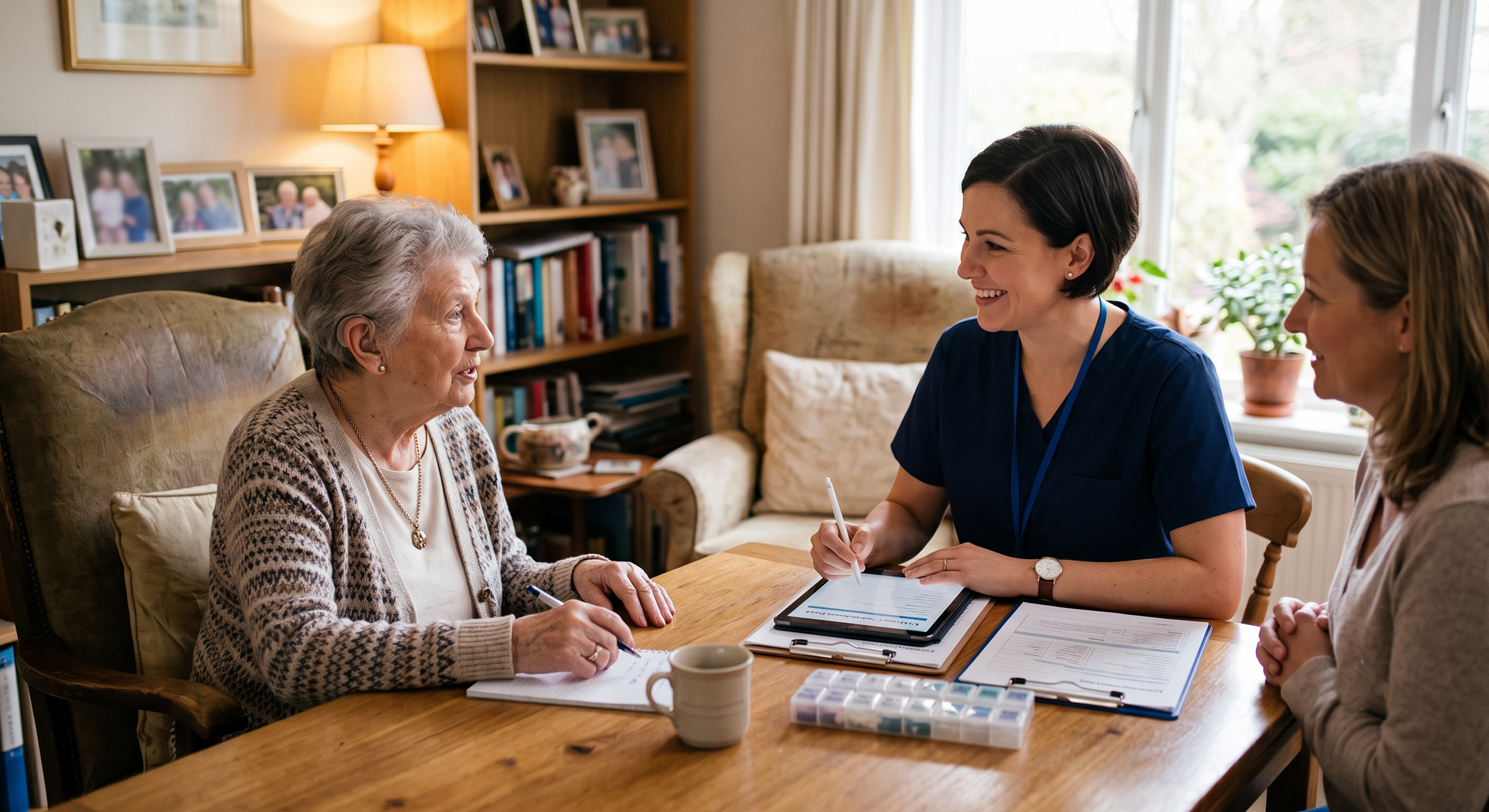
Most assessments take between 60 and 90 minutes depending on the complexity of care needs.
During the visit, the care coordinator will typically discuss:
Current Health Conditions
This may include:
- Recent hospitalizations
- Chronic illnesses
- Dementia or Alzheimer’s diagnosis
- Mobility challenges
- Medications
- Recovery from surgery or injury
The goal is not to provide medical treatment, but to understand what type of daily support is needed.
Activities of Daily Living (ADLs)
One of the most important parts of the assessment is determining whether the senior needs help with Activities of Daily Living, including:
- Bathing
- Dressing
- Grooming
- Toileting
- Walking or transfers
- Eating
Difficulty performing these tasks safely is often the biggest sign that home care could improve quality of life.
Cognitive and Memory Concerns
Families may also discuss:
- Forgetfulness
- Medication mistakes
- Wandering
- Confusion
- Behavioral changes
- Isolation or depression
Bridge Senior Care frequently supports clients living with dementia or Alzheimer’s disease, so these conversations are handled compassionately and respectfully.
Home Safety Evaluation
The care coordinator may identify:
- Loose rugs or tripping hazards
- Poor lighting
- Unsafe stairways
- Bathroom fall risks
- Mobility challenges inside the home
Simple changes can dramatically improve safety and reduce injury risk.
Family Caregiver Challenges
Many family members are already providing care before contacting a professional agency.
The assessment gives families an opportunity to discuss:
- Caregiver stress
- Scheduling difficulties
- Work conflicts
- Burnout concerns
- Overnight supervision challenges
Bridge Senior Care helps families build realistic, sustainable care plans.
Questions Families Should Ask During the Assessment
The assessment is also your opportunity to evaluate the care provider.
Important questions include:
- How are caregivers screened and trained?
- Are caregivers licensed and insured?
- How quickly can services begin?
- What services are available?
- Is there a minimum number of hours?
- How are caregivers matched?
- Do you help with long-term care insurance claims?
- What happens if care needs increase?
Families should feel comfortable asking as many questions as needed.
Creating a Personalized Care Plan
After the assessment, the agency creates a customized care plan outlining:
- Recommended services
- Care schedule
- Safety concerns
- Caregiver matching preferences
- Long-term goals
- Family communication preferences
Plans may include:
- Companion care
- Personal care assistance
- Dementia support
- Overnight supervision
- 24-hour care
- Post-hospital recovery care
Care plans can always be adjusted later as needs change.
[Learn more about our services –
https://www.bridgeseniorcare.com/services]
What If My Loved One Resists Care?
This is extremely common.
Many seniors worry that accepting help means losing independence. In reality, home care is often what allows seniors to remain independent longer.
Helpful strategies include:
- Starting with companion care only
- Introducing care gradually
- Focusing on safety and convenience
- Allowing the senior to participate in decisions
- Framing care as support, not loss of control
Bridge Senior Care takes a relationship-first approach and works carefully to build trust.
How Quickly Can Care Begin After the Assessment?
In many cases, services can begin within:
- 24–48 hours for standard care
- Same-day or emergency scheduling when available
Families often contact us after:
- Hospital discharge
- Falls
- Dementia progression
- Caregiver burnout
- Sudden illness
Quick action can prevent crises and improve outcomes.
Local Example: A Home Assessment in Marysville
A family in Marysville contacted Bridge Senior Care after noticing their mother had become increasingly forgetful and was struggling with bathing safely.
During the assessment, we identified:
- Fall risks in the bathroom
- Missed medications
- Limited food in the kitchen
- Difficulty getting dressed independently
The family initially thought they needed full-time care, but after evaluation, we recommended:
- Morning personal care visits
- Medication reminders
- Grocery assistance
- Weekly companion visits
The customized plan gave the family peace of mind while preserving the mother’s independence.
Why Families in St. Clair County Trust Bridge Senior Care
Families choose Bridge Senior Care because we provide:
- Compassionate, pressure-free consultations
- Personalized care planning
- Flexible schedules
- Dementia and Alzheimer’s support
- 24/7 care availability
- Long-term care insurance assistance
- Locally owned, family-operated service
We believe every family deserves honest guidance and individualized support.
FAQs About In-Home Care Assessments
Is the consultation free?
Yes. Bridge Senior Care offers free in-home consultations throughout St. Clair County.
Does scheduling an assessment commit us to services?
No. There is no obligation to begin care after the assessment.
Can family members attend?
Absolutely. We encourage family involvement during the process.
What if my loved one only needs a small amount of help?
Many clients begin with just a few hours per week.
Do you provide emergency or short-notice care?
Yes. Depending on availability, we can often arrange care quickly after hospital discharge or urgent situations.
Start with a Conversation
The hardest part of getting help is often taking the first step. An in-home care assessment provides clarity, guidance, and peace of mind for families trying to navigate senior care decisions.
Bridge Senior Care proudly helps seniors throughout Marysville and St. Clair County remain safe, independent, and comfortable at home with personalized care plans designed around real needs.
Call (810) 364-3200 to schedule your free in-home assessment
Serving Marysville, Port Huron, and all of St. Clair County
Available 24/7 | Preferred call hours: 8 AM – 5 PM
[Request a Free Consultation –
https://www.bridgeseniorcare.com/contact]