
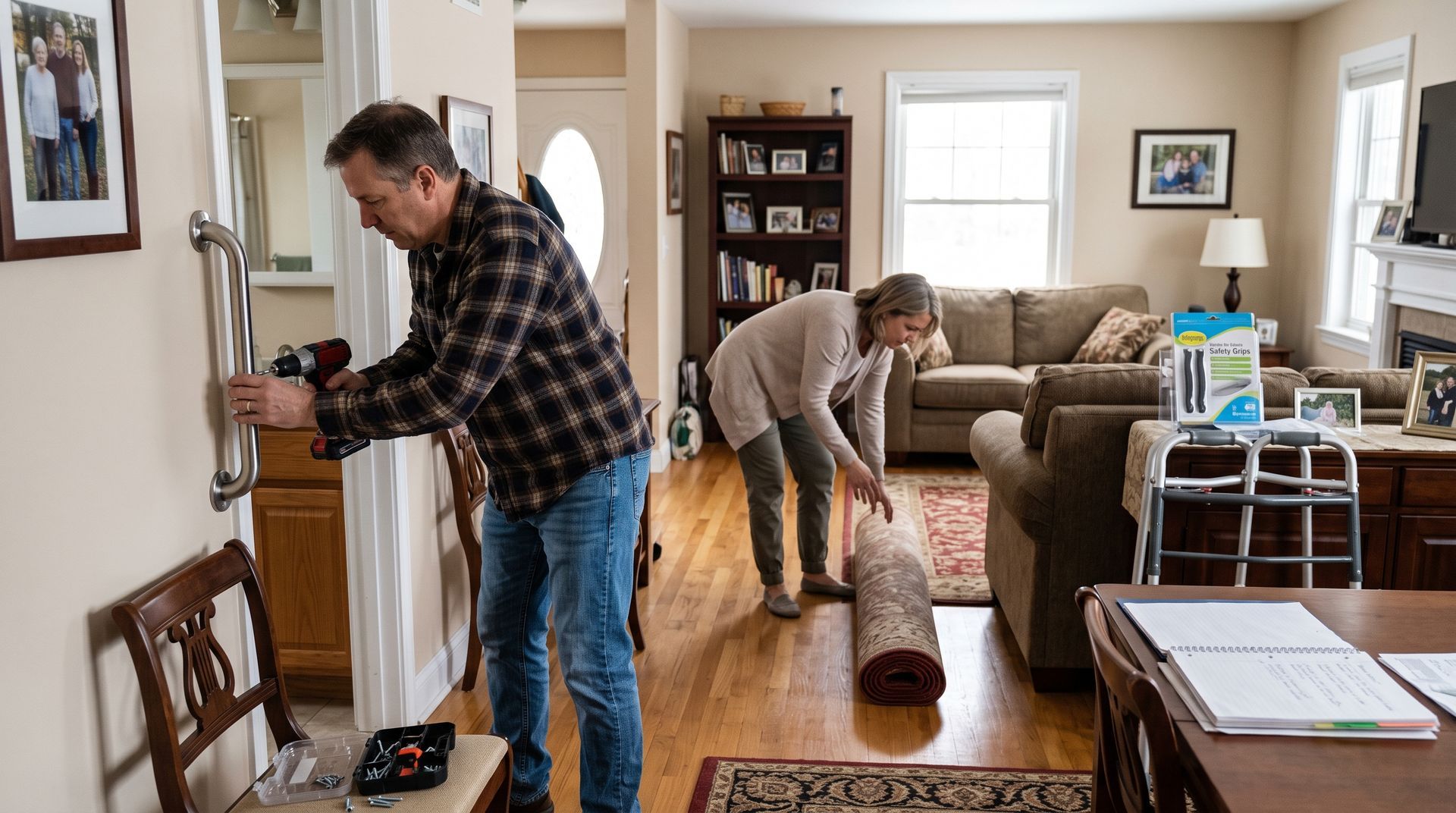

Preparing Your Home for an Aging Parent Returning from the Hospital

October 6, 2026
Two people cleaning a living room, one vacuuming near the door and one rolling up a rug.

Bringing an aging parent home from the hospital can feel overwhelming for families. Whether your loved one is recovering from surgery, illness, injury, or a hospital stay related to chronic health conditions, the transition home is often one of the most vulnerable stages of recovery.

Without proper preparation, seniors face increased risks of:

  • Falls
  • Medication mistakes
  • Re-hospitalization
  • Infection
  • Poor nutrition
  • Caregiver stress

At Bridge Senior Care, we help families throughout Marysville and St. Clair County create safe, supportive environments for seniors returning home after hospitalization.

In this guide, we’ll explain how families can prepare the home, reduce safety risks, and support a smoother recovery process.

Why the First Few Weeks After Hospitalization Matter

The period immediately following hospital discharge is critical.

Many seniors return home:

  • Weaker than before
  • Less mobile
  • More fatigued
  • Confused by medication changes
  • Emotionally overwhelmed

Even seniors who were previously independent may temporarily struggle with:

  • Walking safely
  • Bathing
  • Cooking
  • Toileting
  • Remembering medications
  • Climbing stairs

Without adequate support, recovery setbacks can happen quickly.

Common Reasons Seniors Need Post-Hospital Support

Families often seek help after:

  • Joint replacement surgery
  • Stroke
  • Pneumonia
  • Heart attack
  • Falls or fractures
  • Infection
  • Extended illness
  • Rehabilitation stays

Every recovery is different, but preparation significantly improves safety and outcomes.

10 Steps to Prepare Your Home for a Senior’s Return

1. Remove Fall Hazards Immediately

Falls are one of the biggest dangers after hospitalization.

Before your loved one returns home:

  • Remove loose rugs
  • Clear walkways
  • Secure cords and clutter
  • Rearrange furniture for mobility devices
  • Improve lighting in hallways and bathrooms

Many seniors are weaker than expected after discharge, even if they appear stable at the hospital.

2. Set Up a Main-Floor Recovery Space

If possible, create a recovery area on the first floor to reduce stair use.

This area should include:

  • A comfortable bed or recliner
  • Easy bathroom access
  • Medications
  • Phone charger
  • Water and snacks
  • Mobility aids

Limiting unnecessary movement during early recovery can reduce fall risk and exhaustion.

3. Install Bathroom Safety Equipment

Bathrooms are especially dangerous after surgery or illness.

Helpful additions include:

  • Grab bars
  • Shower chairs
  • Raised toilet seats
  • Non-slip bath mats
  • Handheld showerheads

Bridge Senior Care caregivers frequently assist seniors with safe bathing and bathroom transfers during recovery.

4. Organize Medications Carefully

Hospital discharge often involves:

  • New prescriptions
  • Dosage changes
  • Complex medication schedules

Medication confusion is one of the leading causes of hospital readmission.

Helpful tools include:

  • Pill organizers
  • Medication schedules
  • Reminder alarms
  • Caregiver oversight

Professional caregivers can provide medication reminders and monitor for side effects or concerns.

5. Prepare Easy, Nutritious Meals

After hospitalization, many seniors:

  • Lose appetite
  • Feel too weak to cook
  • Forget to eat regularly

Families should stock:

  • Easy-to-prepare meals
  • Healthy snacks
  • Water and electrolyte drinks
  • Soft foods if swallowing is difficult

Bridge Senior Care caregivers can assist with meal preparation, grocery shopping, and hydration monitoring.

6. Arrange Transportation for Follow-Up Appointments

Many seniors are temporarily unable to drive after:

  • Surgery
  • Stroke
  • Medication changes
  • Mobility decline

Families should plan transportation for:

  • Follow-up appointments
  • Physical therapy
  • Prescription pickup
  • Medical testing

Caregivers can provide transportation assistance when needed.

7. Understand Discharge Instructions Clearly

Before leaving the hospital, families should fully understand:

  • Medication instructions
  • Activity restrictions
  • Therapy recommendations
  • Warning signs to monitor
  • Follow-up schedules

Never hesitate to ask questions before discharge.

Important questions include:

  • What symptoms require immediate attention?
  • How much mobility is safe?
  • What dietary restrictions exist?
  • What support services are recommended?

8. Arrange Professional Home Care Early

Many families underestimate how much support recovery requires.

Professional caregivers can assist with:

  • Bathing and dressing
  • Mobility support
  • Meal preparation
  • Medication reminders
  • Overnight supervision
  • Fall prevention
  • Companionship

Even a few hours of daily assistance can significantly improve recovery outcomes.

[Learn about our post-hospital care services – https://www.bridgeseniorcaremi.com/services]

9. Monitor Emotional Health After Hospitalization

Hospital stays can be emotionally difficult for seniors.

Some older adults experience:

  • Anxiety
  • Depression
  • Confusion
  • Fear of falling
  • Social withdrawal

Companion care and regular family interaction help seniors feel supported and emotionally secure during recovery.

10. Watch for Signs of Complications

Families should carefully monitor for:

  • Increased weakness
  • Confusion
  • Fever
  • Medication reactions
  • Shortness of breath
  • Loss of appetite
  • Swelling or infection
  • Increased falls

Early intervention can prevent hospital readmission.

Why Post-Hospital Recovery Is Harder for Seniors

Recovery often takes longer for older adults due to:

  • Reduced muscle strength
  • Slower healing
  • Multiple health conditions
  • Medication interactions
  • Balance challenges

Seniors may appear physically stable at discharge while still requiring significant daily assistance at home.

This is why many families benefit from temporary home care support during recovery periods.

Local Example: Recovery Support in Marysville

A family in Marysville contacted Bridge Senior Care after their mother returned home following hip replacement surgery.

Although physical therapy visits were scheduled twice weekly, the family quickly realized she still needed help with:

  • Getting in and out of bed
  • Bathing
  • Meal preparation
  • Walking safely
  • Medication reminders

Bridge Senior Care arranged:

  • Morning caregiver visits
  • Mobility supervision
  • Meal assistance
  • Transportation to appointments

The added support helped prevent falls and allowed the client to recover safely and comfortably at home.

How Home Care Reduces Hospital Readmissions

Studies show seniors are less likely to return to the hospital when they receive proper support at home.

Home care helps by:

  • Monitoring changes in condition
  • Preventing falls
  • Improving medication compliance
  • Encouraging proper nutrition
  • Assisting with mobility
  • Providing supervision and companionship

This additional support often makes recovery smoother and less stressful for families.

FAQs About Preparing for Hospital Discharge

How quickly can home care begin after discharge?

Bridge Senior Care can often begin services within 24–48 hours, depending on availability.

Is home care available short-term only?

Yes. Many families use temporary recovery care for several weeks after hospitalization.

Does Medicare cover home care?

Medicare may cover skilled medical visits, but non-medical personal care and supervision are typically private-pay services.

What if my parent refuses help?

Many seniors initially resist care. Starting with small amounts of support often helps ease the transition.

Can caregivers help overnight?

Yes. Overnight and 24-hour care options are available for seniors needing additional supervision.

Helping Your Loved One Recover Safely at Home

Preparing your home before hospital discharge can dramatically improve safety, comfort, and recovery outcomes for aging parents.

Bridge Senior Care proudly helps families throughout Marysville and St. Clair County create personalized recovery plans with compassionate in-home support designed to reduce stress and promote healing.

Call (810) 364-3200 to discuss post-hospital care options
Serving Marysville, Port Huron, and all of St. Clair County
Available 24/7 | Preferred call hours: 8 AM – 5 PM
[Request a Free Consultation – https://www.bridgeseniorcaremi.
com/contact]

Recent Posts

Elderly woman with glasses rubbing her temples, looking stressed against a white background
September 21, 2026
Learn the stages of Alzheimer’s disease and when families in Marysville and St. Clair County should seek professional home care support for loved ones at home.
Two people smiling in a warm kitchen, sharing a cake on a wooden table with fruit and mugs nearby
September 4, 2026
Discover why more seniors in Michigan are choosing to age at home with personalized home care support from Bridge Senior Care in Marysville and St. Clair County.
Two women talk over a board game in a cozy living room by a bright window.
August 20, 2026
Learn how companion care helps seniors reduce loneliness, improve emotional health, and stay socially engaged in Marysville and St. Clair County.
Woman walking down a bright hallway, holding the handrail in a home.
August 5, 2026
Learn practical senior fall prevention tips to make your home safer in Marysville and St. Clair County. Reduce injury risks and help seniors stay independent today.
Two women sit talking in a cozy living room, one holding a clipboard, with books and framed photos nearby.
July 21, 2026
Learn what to expect during an in-home care assessment in Marysville, MI, including safety checks, care planning, and personalized senior support. Contact us today!

Three people examine a tiled bathroom wall beside a mirror and window.
July 6, 2026
Learn the warning signs of caregiver burnout and how families in Marysville and St. Clair County can manage stress while caring for aging parents well. Contact us!
Show More